
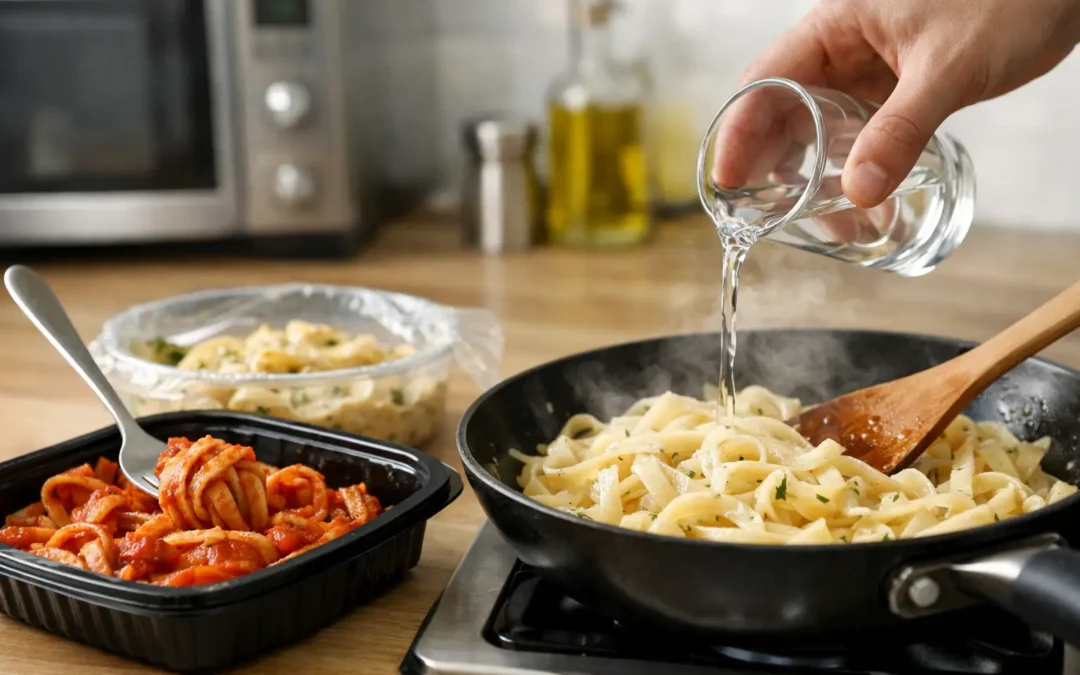
Last night’s pasta deserves better than a blast of microwave heat and a dry, chewy finish. The secret to how to reheat takeout pasta is simple: bring back a little moisture, use gentle heat, and choose the method that suits the dish in front of you. A saucy plate of rigatoni needs a different approach than a baked lasagna or seafood linguine.
With a few small adjustments, leftovers can still feel like a real meal – warm, comforting, and full of the Italian flavors you ordered in the first place. Whether you are settling in after a busy Naples workday or planning an easy family dinner at home, these methods help every bite stay tender and satisfying.
Start With Smart Leftover Storage
Great reheated pasta starts before the leftovers ever reach the refrigerator. Transfer takeout pasta from its original container to a shallow, airtight container when possible, especially if the meal will be sitting for more than a short time. This helps it cool quickly and protects the texture and flavor.
Refrigerate pasta within two hours of bringing it home. Most cooked pasta dishes are best enjoyed within three to four days, though seafood pasta is at its best sooner. If the pasta already looks dry when you open the container, do not worry. A little water, broth, milk, or extra sauce can bring it back to life.
If you have a sauce-heavy dish, store extra sauce separately when you can. It gives you more control when reheating and keeps the pasta from soaking up every last drop overnight.
How to Reheat Takeout Pasta on the Stove
The stovetop is often the best choice for pasta with tomato sauce, vodka sauce, bolognese, Alfredo, or olive oil-based sauces. It gives you control, warms the food evenly, and makes it easy to loosen a sauce as it heats.
Place the pasta in a skillet or sauté pan over low to medium-low heat. Add a small splash of water, broth, or sauce – usually one or two tablespoons per serving is enough to begin. Cover the pan for a minute or two so the trapped steam warms the center of the pasta without overcooking the edges.
Then uncover and toss gently. If the sauce seems tight or the noodles still look dry, add another small splash of liquid. Continue heating just until the pasta is hot throughout. This is not a dish that benefits from rushing. High heat can cause tomato sauce to scorch and cream sauces to separate.
For creamy pasta, a splash of milk or cream can be more helpful than water. Stir often and keep the heat low. Alfredo, carbonara-style sauces, and cheese-based sauces are especially delicate, so patience makes a noticeable difference.
A quick fix for clumped noodles
Pasta naturally absorbs sauce as it rests, which is why leftovers can emerge from the fridge in one solid, delicious-looking cluster. Use tongs or a spoon to separate it slowly as it warms. Avoid pulling cold noodles apart aggressively, since that can tear them. A little steam and liquid will do most of the work for you.
Use the Oven for Baked Pasta and Big Portions
For lasagna, baked ziti, stuffed shells, manicotti, or a family-size portion of pasta, the oven delivers the most even result. It takes longer than the microwave, but it preserves the bubbly, comforting character that makes baked Italian dishes so inviting.
Heat the oven to 325°F. Place the pasta in an oven-safe dish and add a few spoonfuls of sauce or a light splash of water around the edges. Cover the dish tightly with foil to hold in moisture. Reheat a single serving for about 15 to 20 minutes, while a larger dish may need 25 to 35 minutes.
Remove the foil for the final few minutes if you would like the cheese to brown slightly. If the dish has a crisp topping, such as breadcrumbs, leave it uncovered only at the end. Keeping it covered for most of the reheating time prevents dry corners and a hardened layer of cheese.
Let baked pasta rest for a few minutes before serving. The center will be very hot, and that brief pause gives the sauce time to settle into the layers.
The Microwave Method for a Fast, Good Meal
The microwave is not the enemy of leftover pasta. It is simply less forgiving. When you need lunch in a hurry, it can still produce a warm, flavorful plate if you use lower power and short intervals rather than one long stretch of heat.
Place one serving in a microwave-safe bowl. Add a tablespoon of water, broth, milk, or sauce depending on the dish, then cover loosely with a microwave-safe lid or damp paper towel. The cover matters because steam keeps the noodles supple.
Heat at 50 to 70 percent power for one minute, stir, and continue in 30-second intervals until hot. Stirring distributes the heat and helps prevent one side of the bowl from becoming scorching while the middle remains cold.
Cheesy baked pasta may need an extra splash of sauce before microwaving. Pasta with a lighter olive oil or garlic sauce usually needs only a few drops of water. Once it is warm, finish with freshly grated cheese, black pepper, crushed red pepper, or a drizzle of olive oil if you have it on hand. A small finishing touch can make leftovers feel far from ordinary.
Give Seafood Pasta Special Care
Seafood pasta is worth reheating gently because shrimp, scallops, fish, and calamari can turn firm fast. The goal is to warm the pasta and sauce while exposing the seafood to as little additional cooking as possible.
A covered skillet over low heat is usually your best option. Add a splash of water, broth, or sauce and warm the pasta slowly. If you can easily separate the seafood from the pasta before heating, warm the noodles and sauce first, then add the seafood near the end for just a minute or two.
Avoid a high-power microwave for seafood pasta when time allows. It may be convenient, but it can leave shrimp rubbery and fish dry. If the microwave is your only option, use 50 percent power and check the dish often.
What Not to Do When Reheating Pasta
A few common habits are responsible for most disappointing leftovers. Do not reheat pasta without any added moisture, particularly if it has been sitting in the refrigerator overnight. Do not use high heat in an attempt to save time. And do not keep reheating the same portion again and again.
Instead, warm only what you plan to eat. This protects the quality of the remaining pasta and is a safer way to handle leftovers. If the pasta smells off, has been left out too long, or has been in the refrigerator beyond its recommended window, it is better to let it go than take a chance.
There is also no need to drown a dish in liquid. Start with a small amount, then add more only if needed. You want a glossy, saucy finish, not a watery plate.
Match the Method to the Sauce
There is no single best way to reheat every pasta dish. Tomato sauces and meat sauces are forgiving and shine in a skillet. Creamy sauces need lower heat and a little milk or cream. Baked dishes do best in the oven, while a quick microwave method works well for a modest portion when you cover and stir it.
Pasta from a favorite neighborhood Italian dinner can still make a memorable second meal. If you brought home a generous portion from Bernwood Tavern & Cucina, treat it with the same care that went into preparing it: low heat, a touch of moisture, and enough time for the flavors to wake up again.
A warm bowl of pasta is one of the simplest comforts around. Give your leftovers a little patience, set the table, and let dinner feel like an occasion all over again.